
 All vikis
 Aion 2
 Ananta
 ARC Raiders
 ArcheAge Chronicles
 Call of Duty: Modern Warfare 4
 Chrono Odyssey
 Civilization 3
 Civilization 4
 Crimson Desert
 Deadlock
 Diablo 4
 Diablo 5
 Enshrouded
 Fable
 Final Fantasy Resonance
 Grand Theft Auto 6
 Heroes of Might and Magic 3
 Heroes of Might and Magic: Olden Era
 Kingdom Come: Deliverance 2
 Path of Exile 2
 Phantom Blade Zero
 Probably Stolen
 Slay the Spire 2
 Soulframe
Map of Hyrule
Ocarina of Time's Hyrule is built around Hyrule Field, a central plain with Lon Lon Ranch in its middle and paths to every region: Kokiri Forest and the Lost Woods, Hyrule Castle and Castle Town, Kakariko Village and Death Mountain, Zora's River and Domain, Lake Hylia, and the Gerudo lands out to the Desert Colossus. Every region changes between Link's child and adult eras.
The map of The Legend of Zelda: Ocarina of Time is a single kingdom, Hyrule, with Hyrule Field at its center and every other region opening off it: Kokiri Forest, Hyrule Castle and its town, Kakariko Village under Death Mountain, the Zora's lands, Lake Hylia, Lon Lon Ranch and the Gerudo desert. "Located in the heart of the Kingdom of Hyrule, it serves as a gateway to many different locations," Eiji Aonuma says as he walks onto Hyrule Field in Nintendo's demonstration of the Nintendo Switch 2 remake on Sep 8, 2026, with Death Mountain smoking on the skyline. Each region has a child version and an adult version seven years later, and the remake keeps the same layout and the loading screens between areas, which Aonuma says were "intentionally kept to preserve the essence of the original game."
Quick facts
| Hub | Hyrule Field, with Lon Lon Ranch at its center |
| East | Kokiri Forest, the Lost Woods, Sacred Forest Meadow |
| North | Hyrule Castle, Castle Town (the Market), Temple of Time |
| East of Castle Town | Kakariko Village and its Graveyard, then Death Mountain |
| Northeast | Zora's River, Zora's Domain, Zora's Fountain |
| South | Lake Hylia, with the Water Temple and the Fishing Pond |
| West | Gerudo Valley, Gerudo's Fortress, Haunted Wasteland, Desert Colossus |
| Two eras | Child and adult (seven years later), switched at the Temple of Time |
| Save points | Outside dungeons, a saved game restarts at Link's House (child) or the Temple of Time (adult) |
| Remake | Free camera everywhere, time passes in towns, loading screens kept (Nintendo) |
Hyrule Field
Hyrule Field is the central plain that links every region, and Link can reach many of them from his first steps onto it. PGReviews' retrospective of Feb 17, 2023 calls it "a vast stretch of land acting as a hub with paths leading to every major region", while finding little in it beyond grottoes hidden in the ground and the day and night cycle. Lon Lon Ranch sits in its middle. Ten Big Poes roam it in the adult era, best chased on Epona and sold, bottled, to the Poe Collector (Side quests, masks and minigames). In the remake, Aonuma's demonstration crosses it on foot with the new roll-then-dash move, and opens the new Threads of Time screen there to show the next objective.
Kokiri Forest, the Lost Woods and Sacred Forest Meadow
Kokiri Forest, in the east, is where the game begins: a village of tree-stump houses guarded by the Great Deku Tree, whose interior is the first dungeon, Inside the Deku Tree. Aonuma opens his demonstration there, noting that "the visuals have been completely redone" and that the camera now rotates, which the Nintendo 64's single control stick did not allow. Above the village, the Lost Woods are a maze whose music guides Link to the Sacred Forest Meadow, where Saria teaches Saria's Song and where the Forest Temple stands. The Skull Kid plays in the Lost Woods, and a passage there leads underwater to Zora's River. In the adult era monsters overrun the village and a new Deku Tree sprout grows.
Hyrule Castle, Castle Town and the Temple of Time
Castle Town, also called the Market, lies in the north behind a drawbridge, between Hyrule Castle and the Temple of Time. On the Nintendo 64 it was drawn on fixed, pre-rendered backgrounds; Ocarina of Time 3D rendered it in real time, and in the remake "you can move it freely," Aonuma says of the camera, adding back alleys with "quite a few new details", townsfolk gossip and minigames in its shops. Nintendo also says time no longer stops in town: "time marches on, no matter where you are." Zelda Wiki records that Shigeru Miyamoto spent a few weeks in northern Bavaria studying half-timbered buildings for the Market. The castle grounds hold Zelda's courtyard and a Great Fairy who teaches Din's Fire. The Temple of Time holds the Door of Time and the Master Sword, and it is where Link moves between the two eras. In the adult era Castle Town is a ruin full of ReDeads and the castle has become Ganon's Castle.
Kakariko Village and the Graveyard
Kakariko Village, east of Castle Town, is the way up Death Mountain and a village with a dark side. PGReviews points to the Bottom of the Well, "one of the creepiest areas in the game", and the Shadow Temple under the Graveyard, home of Dampé the gravekeeper and his nightly digging game. The village also holds the House of Skulltula, the windmill where the Song of Storms is learned and, in the Graveyard, the Royal Family's Tomb, where Link learns the Sun's Song. The well is drained in the child era by playing the Song of Storms in the windmill, opening the Bottom of the Well. In the adult era the townspeople of Castle Town have moved here.
Death Mountain
Death Mountain rises behind Kakariko in three parts: Death Mountain Trail, Goron City and Death Mountain Crater. In Zelda Dungeon's Nintendo 64 walkthrough, Link climbs the trail past Tektites to find a Goron lamenting the boulder that blocks Dodongo's Cavern, then follows the signs to Goron City, a city built in tiers with rolling Gorons. The trail has a Great Fairy who grants the Magic Meter and the Spin Attack, and Biggoron sits at the summit (Biggoron's Sword and trading quests). The crater holds the Fire Temple and a second Great Fairy, and its heat calls for the Goron Tunic. Nintendo's Japanese Zelda account posted a clip of the remake's Goron City on Sep 28, 2026, as VICE reported.
Zora's River, Zora's Domain and Zora's Fountain
Zora's River runs northeast to Zora's Domain, a cave city of waterfalls and pools, and beyond it to Zora's Fountain, where Lord Jabu-Jabu lives. The remake's waterfalls appear in the extra clips Nintendo posted on its Japanese game site, which Nintendo Life collected on Sep 9, 2026. Zelda's Lullaby opens the way into the Domain, a Bean Seller near the river sells Magic Beans, and the Fountain holds a Great Fairy who teaches Farore's Wind. As a child Link enters Inside Jabu-Jabu's Belly here; as an adult he finds the Domain frozen, King Zora trapped in red ice, and the Ice Cavern behind the Fountain.
Lake Hylia
Lake Hylia, in the south, is the source of Hyrule's water and holds the Water Temple at its bottom. It is also where Link teaches a scarecrow the tune that becomes the Scarecrow's Song, and where the Fishing Pond stands, a minigame PGReviews ranks among the series' hardest to love. Iwata Asks says its Osaka-dialect owner was modeled on a real fishing-shop owner near Neyagawa. In the adult era Link finds the lake nearly drained.
Lon Lon Ranch
Lon Lon Ranch sits in the middle of Hyrule Field, home of Talon, his daughter Malon and the foal Epona. The remake's paddock, with horses in it, is among the clips from Nintendo's Japanese site. Malon teaches the child Link Epona's Song; in the adult era the ranch hand Ingo has taken over, and Link wins Epona from him in a race (Epona and Lon Lon Ranch).
The Gerudo lands
The Gerudo Desert fills the west: Gerudo Valley, Gerudo's Fortress, the Haunted Wasteland and the Desert Colossus, home of the Spirit Temple. Nintendo's Japanese clips show the remake's red-rock fortress walls. Ganondorf's people hold the fortress, where the adult Link frees four captive carpenters to earn the Gerudos' trust, and the optional Gerudo Training Ground is inside it. Beyond the Haunted Wasteland, the Desert Colossus has the third Great Fairy of magic, who teaches Nayru's Love. The child Link reaches the Spirit Temple with the Requiem of Spirit.
Seven years later
Nearly every region changes in the adult era, and PGReviews counts that as the world's best feature. Castle Town is ruined and its people live in Kakariko, Ingo runs Lon Lon Ranch, Zora's Domain and King Zora are frozen, and the Gerudo lands open to the adult Link. Magic Beans planted as a child grow into Magic Plants that carry the adult to new ledges, and a Great Fairy on the path to Ganon's Castle doubles Link's defense. The remake adds one more change of time: Nintendo says time passes in towns and "new characters and enemies appear after dark."
What is new on the remake's map
Nintendo's own descriptions of the Nintendo Switch 2 version say the camera moves freely everywhere, towns keep the day and night cycle, and Link can jump, swim faster and dive. Aonuma says Castle Town has back alleys with "some parts that were merely backdrops at the time." IGN's comparison of Sep 12, 2026 judges Hyrule Field's size "extremely similar to the original" from the footage and minimap, with some changed topography. Nintendo has not published a full map of the remake as of Oct 14, 2026. The changes are listed on What's new in the remake.
Frequently asked questions
What are the locations in Ocarina of Time? Ocarina of Time's Hyrule has Hyrule Field at its center, Lon Lon Ranch, Kokiri Forest, the Lost Woods and Sacred Forest Meadow, Hyrule Castle, Castle Town and the Temple of Time, Kakariko Village and its Graveyard, Death Mountain and Goron City, Zora's River, Domain and Fountain, Lake Hylia, and the Gerudo lands out to the Desert Colossus.
Where is Lon Lon Ranch in Ocarina of Time? Lon Lon Ranch is in the middle of Hyrule Field in Ocarina of Time, surrounded by the field on every side.
How do you get to Kakariko Village in Ocarina of Time? Kakariko Village in Ocarina of Time is east of Castle Town across Hyrule Field; it is also the way to Death Mountain.
Is the Ocarina of Time remake open world? No: the Nintendo Switch 2 remake of Ocarina of Time keeps the original's regions joined by Hyrule Field, and Nintendo says it intentionally kept loading screens between certain areas. Eiji Aonuma says it has a different appeal from Breath of the Wild, where you go wherever you want.
Is Castle Town bigger in the Ocarina of Time remake? Nintendo shows the remake's Castle Town with a free camera and back alleys that were "merely backdrops" in the 1998 game, plus gossip and minigames; it has not given a size comparison as of Oct 14, 2026.
Where are the Great Fairy fountains in Ocarina of Time? Ocarina of Time has six Great Fairies: at Hyrule Castle (Din's Fire), Zora's Fountain (Farore's Wind), the Desert Colossus (Nayru's Love), Death Mountain Trail (Magic Meter), Death Mountain Crater (a larger Magic Meter) and the path to Ganon's Castle (doubled defense).
Sources
- The Legend of Zelda: Ocarina of Time, Zelda Wiki (community reference), read Oct 14, 2026
- Great Fairy, Big Poe, Magic Bean, Song of Storms, Sun's Song, House of Skulltula, Saria's Song, Scarecrow's Song, Zelda Wiki (community reference), read Oct 14, 2026
- The Legend of Zelda: Ocarina of Time 3D, Zelda Wiki (community reference), read Oct 14, 2026
- Iwata Asks: The Legend of Zelda: Ocarina of Time 3D, Original Development Staff Part 2, Nintendo, read Oct 14, 2026
- The Legend of Zelda: Ocarina of Time (UK), Nintendo UK, read Oct 14, 2026
- The Legend of Zelda 40th Anniversary celebration revealed in new Nintendo Direct presentation, Nintendo of America, Sep 8, 2026
- Nintendo Reveals New Zelda Ocarina of Time Remake Gameplay Footage, VICE, Sep 28, 2026
- The Legend of Zelda: Ocarina of Time - Mr. Aonuma Gameplay Demonstration, Nintendo of America, Sep 8, 2026 (video)
- Ocarina of Time Remake - EVEN MORE New Gameplay, Nintendo Life, Sep 9, 2026 (video, Nintendo's footage)
- The 40 Biggest Changes in the Zelda: Ocarina of Time Gameplay, IGN, Sep 12, 2026 (video)
- Ocarina of Time Retrospective | Defining a Genre, PGReviews, Feb 17, 2023 (video)
- Legend of Zelda Ocarina of Time Walkthrough 04 (1/6) "Goron City", Zelda Dungeon, Jun 20, 2009 (video)
Moments
The Legend of Zelda: Ocarina of Time – Mr. Aonuma Gameplay Demonstration
Nintendo of America
- The map of The Legend of Zelda: Ocarina of Time is a single kingdom, Hyrule, with Hyrule Field at its center and every…
- Kokiri Forest, in the east, is where the game begins: a village of tree-stump houses guarded by the Great Deku Tree…
- Castle Town, also called the Market, lies in the north behind a drawbridge, between Hyrule Castle and the Temple of…
Ocarina of Time Retrospective | Defining a Genre
PGReviews
- Hyrule Field is the central plain that links every region, and Link can reach many of them from his first steps onto…
- Kakariko Village, east of Castle Town, is the way up Death Mountain and a village with a dark side. PGReviews points…
- Lake Hylia, in the south, is the source of Hyrule's water and holds the Water Temple at its bottom. It is also where…
- Nearly every region changes in the adult era, and PGReviews counts that as the world's best feature. Castle Town is…
Legend of Zelda Ocarina of Time Walkthrough 04 (1/6) "Goron City"
Zelda Dungeon
Ocarina of Time Remake - EVEN MORE New Gameplay
Nintendo Life
- Zora's River runs northeast to Zora's Domain, a cave city of waterfalls and pools, and beyond it to Zora's Fountain…
- Lon Lon Ranch sits in the middle of Hyrule Field, home of Talon, his daughter Malon and the foal Epona. The remake's…
- The Gerudo Desert fills the west: Gerudo Valley, Gerudo's Fortress, the Haunted Wasteland and the Desert Colossus…
Photos
Related
-
 Speedrunning and glitchesThe Ocarina of Time Any% world record is 3:47.900 by CountLG, set on Jul 13, 2024 on a Nintendo 64 and still first on speedrun.com as of Oct 14, 2026. Runs that short use Stale Reference Manipulation and arbitrary code execution to warp to the ending; the first sub-10-minute run came in Feb 2020.
-
-
-
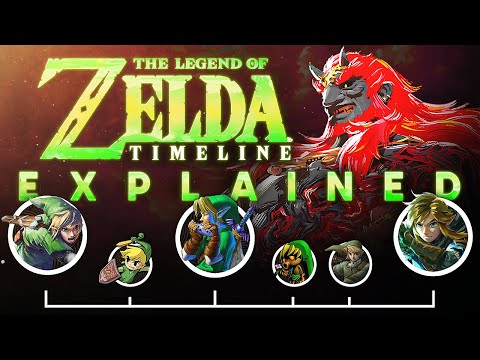 Zelda timeline splitNintendo's official Zelda timeline, first published in Hyrule Historia (Japan, Dec 21, 2011), splits into three branches at the end of Ocarina of Time: the Child timeline (Majora's Mask, Twilight Princess, Four Swords Adventures), the Adult timeline (The Wind Waker, Phantom Hourglass, Spirit Tracks) and a branch where Link loses to Ganondorf (A Link to the Past through the original The Legend of Zelda).
-
-
-
-
See also
-
-
-
 Side quests, masks and minigamesOcarina of Time's main side quests are the Happy Mask Shop's mask sales (ending in the Mask of Truth), winning Epona from Ingo, the six Great Fairy Fountains, ten Big Poes for a Bottle, ten Magic Beans, the Fishing Pond, Dampé's gravedigging and race, and the minigames of Castle Town, Kakariko, the Lost Woods and Gerudo's Fortress. The Nintendo Switch 2 remake adds masks unlocked by new Young Link and Young Zelda amiibo in 2027.
-
-
-
 Ganon's CastleGanon's Castle is the final dungeon of Ocarina of Time: after all six medallions, the Sages build a rainbow bridge to it, Link breaks six barriers with Light Arrows (finding the Golden Gauntlets on the way), climbs the tower to fight Ganondorf, escapes the collapsing castle with Zelda, and defeats Ganon with the Master Sword.