
 All vikis
 Aion 2
 Ananta
 ARC Raiders
 ArcheAge Chronicles
 Call of Duty: Modern Warfare 4
 Chrono Odyssey
 Civilization 3
 Civilization 4
 Crimson Desert
 Deadlock
 Diablo 4
 Diablo 5
 Enshrouded
 Fable
 Final Fantasy Resonance
 Grand Theft Auto 6
 Heroes of Might and Magic 3
 Heroes of Might and Magic: Olden Era
 Kingdom Come: Deliverance 2
 Path of Exile 2
 Phantom Blade Zero
 Probably Stolen
 Slay the Spire 2
 Soulframe
Nintendo 64 original and re-releases
The Legend of Zelda: Ocarina of Time first came out on the Nintendo 64 on Nov 21, 1998 in Japan and Nov 23, 1998 in North America, in three revisions (1.0, 1.1 and 1.2), and has since been re-released on GameCube, iQue Player, the Wii and Wii U Virtual Console and Nintendo Switch Online + Expansion Pack (Oct 25, 2021), before the Nintendo Switch 2 remake due Nov 5, 2026.
The Legend of Zelda: Ocarina of Time was released for the Nintendo 64 on Nov 21, 1998 in Japan, Nov 23, 1998 in North America, Dec 11, 1998 in Europe and Dec 18, 1998 in Australia. Introducing the remake in Nintendo's demonstration of Sep 8, 2026, series producer Eiji Aonuma says over Nintendo 64 footage of the original that it "was the first 3D game in the Legend of Zelda series", in which you played "as both child... and adult Link", with a mechanic for targeting enemies and the Goron and Zora tribes. Nintendo EAD developed it (Development history), it sold 7.6 million copies by Nintendo's count at GDC 2004, and it has been sold again on almost every Nintendo home system since: GameCube, the Chinese iQue Player, the Wii and Wii U Virtual Console and Nintendo Switch Online. Ocarina of Time 3D (Nintendo 3DS, 2011) and the Nintendo Switch 2 remake of The Legend of Zelda: Ocarina of Time (Nov 5, 2026) are rebuilt games rather than re-releases; Master Quest, its remixed dungeons, first shipped on GameCube.
Quick facts
| Platform | Nintendo 64 (32 MB cartridge) |
| Developer and publisher | Nintendo EAD; Nintendo |
| Japan | Nov 21, 1998 |
| North America | Nov 23, 1998 |
| Europe | Dec 11, 1998 |
| Australia | Dec 18, 1998 |
| Revisions | 1.0, 1.1 and 1.2 in Japan and North America; two in Europe |
| North American pre-orders | A Collector's Edition box with a gold cartridge |
| GameCube | Ocarina of Time / Master Quest bonus disc (Japan Nov 28, 2002); Collector's Edition (North America Nov 17, 2003) |
| iQue Player (China) | Nov 2003 |
| Wii Virtual Console | Feb 26, 2007 (North America), 1000 Wii Points |
| Wii U Virtual Console | Jul 2, 2015 (North America and Europe) |
| Nintendo Switch Online + Expansion Pack | Oct 25, 2021 |
| Lifetime sales (Nintendo 64) | 7.6 million (Nintendo, GDC 2004) |
The 1998 release
Ocarina of Time reached Japan first, on Nov 21, 1998, two days ahead of North America and three weeks ahead of Europe. It shipped on a 32 MB cartridge, the format the game moved to after it was first planned for the Nintendo 64DD disk drive. The launch was the biggest Nintendo had seen: more than 500,000 pre-orders in the United States, a Guinness World Records entry for advance orders, 2.5 million copies sold in the US in 1998 and 920,000 in Japan, where it was the eighth best seller of the year (IGN, Jan 7, 1999). How it was received is on Reception and legacy.
North American pre-orders came in a "Collector's Edition" box holding a gold-colored cartridge, continuing a custom that began with the gold cartridge of the original Legend of Zelda in 1986 (according to Wikipedia). Standard copies used a gray cartridge.
Versions 1.0, 1.1 and 1.2
Ocarina of Time exists in three Nintendo 64 revisions in Japan and North America, 1.0, 1.1 and 1.2, and two in Europe. OmegaX5000's version guide of Dec 25, 2013 calls them Ocarina 1, 2 and 3: the first, sold on gold and gray cartridges, was on shelves the shortest time because of its text errors and glitches, and each later revision corrected more of them. Zelda Wiki, a community reference, says the Japanese and North American copies of each revision are identical apart from a region and language byte, and that all five Nintendo 64 versions were finished before the Nov 21, 1998 launch.
The cartridges themselves differ around the world. KCTries' version comparison of Dec 7, 2020 lists Japanese, Brazilian, Australian, European, Hong Kong and Taiwan cartridges besides the North American gray, gold Collector's and Player's Choice ones, and explains the builds: NTSC for the US and Japan with versions 1.0, 1.1 and 1.2, and PAL for Europe with two versions, its 1.0 matching NTSC 1.1 and its 1.1 matching NTSC 1.2. Among the fixes in 1.1, KCTries points to a glitch that let Link leave the fishing pond with the rod.
The best known change is the Fire Temple music. Versions 1.0 and 1.1 use a chanting sample in the dungeon's theme; version 1.2 and every later release replace it with a different track, which OmegaX5000 describes as a slight remix of the Shadow Temple's music. In 2012 Nintendo told GameTrailers that the chant came from a commercial sound library, and OmegaX5000 stresses that the change followed Nintendo's own policy against religious material rather than any public outcry. Zelda Wiki and a GameTrailers episode of Feb 22, 2011, which compared debug data across versions, both place the change before the game's release.
Version 1.2 also recolored Ganondorf's blood. In versions 1.0 and 1.1 he coughs up red blood after the final battle in the collapsing castle, and blood splatters from Ganon's head at the finishing blow; in 1.2 and the European versions both are green. OmegaX5000 suggests the change was meant to protect the game's rating, which is his guess rather than Nintendo's word.
GameCube: the bonus disc and the Collector's Edition
The GameCube versions are a modified version 1.2. OmegaX5000 shows the main change: the Gerudo crest, a crescent moon and star on blocks, switches and the Mirror Shield, is replaced everywhere by the design introduced in Majora's Mask. The same build later appeared as a playable trial in Super Smash Bros. Brawl, he notes.
Nintendo put Ocarina of Time on GameCube twice. The first was the "Ocarina of Time / Master Quest" bonus disc, with the original game and the remixed Master Quest, a pre-order bonus for The Wind Waker in Japan from Nov 28, 2002 and in North America and Europe in 2003 (Feb 17 or Feb 18, 2003 in North America, May 3, 2003 in Europe), sold in some regions in a bundle with The Wind Waker. The second was The Legend of Zelda: Collector's Edition (Japan Nov 7, 2003; UK Nov 14, 2003; US Nov 17, 2003), which held The Legend of Zelda, Zelda II, Ocarina of Time and Majora's Mask with a Wind Waker demo; in North America it came with GameCube bundles, Nintendo Power subscriptions and game registrations. KCTries lists the European offers, including the Mario Kart: Double Dash!! limited pack and Club Nintendo.
The GameCube discs emulate the Nintendo 64 game rather than port it, at 640x480 with progressive scan instead of 320x240. The button colors match the GameCube controller, Z-targeting becomes "L Targeting" on the L Button, items go on the C-Stick and the X, Y and Z Buttons, and KCTries notes that the slowdown of the original, such as during the tower escape, is gone.
iQue Player, Virtual Console and Super Smash Bros. Brawl
In China, Ocarina of Time was released for the iQue Player in November 2003 (Nov 17 according to Zelda Wiki, Nov 18 in iQue's own press release as cited by Wikipedia), a full Chinese translation of version 1.2 and the first Zelda game sold in China. KCTries points out that the faster hardware removes the lag of the Nintendo 64 but puts the audio out of sync when Ganon's castle collapses. The Wii Virtual Console version followed on Feb 26, 2007 in North America (Feb 23 in Europe, Feb 22 in Australia) for 1000 Wii Points, and the Wii U Virtual Console version on Jul 2, 2015 in North America and Europe (Jul 3 in Australia, Dec 23, 2015 in Japan). Both use version 1.2 with the GameCube changes but the Nintendo 64's button colors. The Wii's controllers had no rumble, which made the Stone of Agony useless there; the Wii U restored it.
Ocarina of Time was also one of the "Masterpieces" in Super Smash Bros. Brawl for the Wii (2008), a timed trial unlocked by playing ten battles as Toon Link. KCTries explains that it could be played for a few minutes from two saves, one as young Link at the start of the game and one as adult Link just after drawing the Master Sword.
Nintendo Switch Online + Expansion Pack
Ocarina of Time was part of the launch lineup of Nintendo Switch Online + Expansion Pack, the higher membership tier that added Nintendo 64 games on Oct 25, 2021 in North America (Oct 26 in Europe). Arekkz Gaming's launch-day video of Oct 26, 2021 lists the first nine Nintendo 64 games, Super Mario 64, Ocarina of Time, Mario Kart 64, Lylat Wars, Sin and Punishment, Dr. Mario 64, Mario Tennis 64, Operation WinBack and Yoshi's Story, and plays Ocarina of Time on Switch.
The Switch version offers both the North American and the European game. Arekkz explains that Nintendo clarified before launch that every Nintendo 64 game in the Expansion Pack would be offered at 60 Hz: picking the North American version gives 60 Hz, and the European (PAL) version, which once ran at 50 Hz, can still be chosen from the menu. On Nintendo Switch 2 the original is in the "Nintendo 64 - Nintendo Classics" collection, which still requires Nintendo Switch Online + Expansion Pack.
The Nintendo Switch 2 game of Nov 5, 2026 is a new remake, not one of these re-releases: Nintendo calls it "built from the ground up for the Nintendo Switch 2" (What's new in the remake, Release date and time). Aonuma says in the same demonstration that it keeps the loading screens between certain areas "to preserve the essence of the original game".
Frequently asked questions
When did Ocarina of Time come out on the Nintendo 64? The Legend of Zelda: Ocarina of Time came out on the Nintendo 64 on Nov 21, 1998 in Japan, Nov 23, 1998 in North America, Dec 11, 1998 in Europe and Dec 18, 1998 in Australia.
What is the gold cartridge of Ocarina of Time? The gold cartridge was the North American pre-order version of Ocarina of Time, sold in a "Collector's Edition" box; the game on it is the same as on the gray cartridge, and early gold copies are version 1.0.
What is the difference between Ocarina of Time 1.0, 1.1 and 1.2? Ocarina of Time 1.1 and 1.2 fix text errors and glitches found in 1.0, and version 1.2 also replaces the Fire Temple's chanting music and turns Ganondorf's blood from red to green; the GameCube, Virtual Console and Switch versions are built on 1.2.
Is Ocarina of Time on Nintendo Switch Online? Yes: Ocarina of Time has been on Nintendo Switch Online + Expansion Pack since Oct 25, 2021, and on Nintendo Switch 2 it is in the Nintendo 64 - Nintendo Classics collection, which needs the Expansion Pack.
Was Ocarina of Time on the Wii and the GameCube? Ocarina of Time was released on the Wii Virtual Console on Feb 26, 2007 (1000 Wii Points), on the Wii U Virtual Console on Jul 2, 2015, and twice on GameCube: the Ocarina of Time / Master Quest bonus disc (2002 to 2003) and The Legend of Zelda: Collector's Edition (2003).
Which version of Ocarina of Time should I play? For the 1998 game itself, the Nintendo Switch Online version is the easiest to reach today; Ocarina of Time 3D (Nintendo 3DS, 2011) rebuilt it with new graphics and extras, and the Nintendo Switch 2 remake due Nov 5, 2026 rebuilds it again.
Sources
- The Legend of Zelda: Ocarina of Time, Wikidata (release dates), read Oct 14, 2026
- The Legend of Zelda: Ocarina of Time, Zelda Wiki (community reference: revisions, re-release dates, iQue, Switch Online), read Oct 14, 2026
- The Legend of Zelda: Ocarina of Time / Master Quest, Zelda Wiki (community reference), read Oct 14, 2026
- The Legend of Zelda: Collector's Edition, Zelda Wiki (community reference), read Oct 14, 2026
- The Legend of Zelda: Ocarina of Time, Wikipedia (gold cartridge), read Oct 14, 2026
- Zelda Breaks All Records, IGN, Jan 7, 1999
- GDC 2004: The History of Zelda, IGN, Mar 26, 2004
- Zelda's Study: Nintendo almost offended gamers of the world's second largest religion, Zelda Universe (community reference), May 28, 2019
- Nintendo 64 - Nintendo Classics, Nintendo of America, read Oct 14, 2026
- The Legend of Zelda: Ocarina of Time (Nintendo Switch 2), Nintendo of America, read Oct 14, 2026
- The Legend of Zelda: Ocarina of Time - Mr. Aonuma Gameplay Demonstration, Nintendo of America, Sep 8, 2026 (video)
- Ocarina of Time Version Differences, OmegaX5000, Dec 25, 2013 (video)
- The Legend of Zelda Version Differences: Ocarina of Time vs Ocarina of Time 3D, KCTries, Dec 7, 2020 (video)
- Ocarina of Time on SWITCH! Nintendo Switch Online Expansion is Here + N64 Game Details & More!, Arekkz Gaming, Oct 26, 2021 (video)
Moments
The Legend of Zelda: Ocarina of Time – Mr. Aonuma Gameplay Demonstration
Nintendo of America
Ocarina of Time Version Differences
OmegaX5000
- Ocarina of Time exists in three Nintendo 64 revisions in Japan and North America, 1.0, 1.1 and 1.2, and two in Europe…
- The best known change is the Fire Temple music. Versions 1.0 and 1.1 use a chanting sample in the dungeon's theme…
- Version 1.2 also recolored Ganondorf's blood. In versions 1.0 and 1.1 he coughs up red blood after the final battle in…
- The GameCube versions are a modified version 1.2. OmegaX5000 shows the main change: the Gerudo crest, a crescent moon…
The Legend of Zelda Version Differences: Ocarina of Time vs Ocarina of Time 3D
KCTries
- The cartridges themselves differ around the world. KCTries' version comparison of Dec 7, 2020 lists Japanese…
- Nintendo put Ocarina of Time on GameCube twice. The first was the "Ocarina of Time / Master Quest" bonus disc, with…
- The GameCube discs emulate the Nintendo 64 game rather than port it, at 640x480 with progressive scan instead of…
- In China, Ocarina of Time was released for the iQue Player in November 2003 (Nov 17 according to Zelda Wiki, Nov 18 in…
- Ocarina of Time was also one of the "Masterpieces" in Super Smash Bros. Brawl for the Wii (2008), a timed trial…
Ocarina of Time on SWITCH! Nintendo Switch Online Expansion is Here + N64 Game Details & More!
Arekkz Gaming
Related
-
-
-
-
-
-
-
 BottlesThe original Ocarina of Time has four Bottles, and the Nintendo Switch 2 remake adds a fifth, from a new bug quest in Castle Town's shop: Ruto's Letter at the bottom of Lake Hylia, Talon's Cucco game at Lon Lon Ranch and the Cucco Lady's seven Cuccos in Kakariko Village (all as young Link), and the Poe Collector's reward for ten Big Poes (as adult Link). Keep fairies, which revive Link, and potions in them; bugs, fish, Blue Fire and Poes are carried in them too.
-
 Gold SkulltulasOcarina of Time has 100 Gold Skulltulas, most of which come out only at night; each leaves a token you trade at the House of Skulltula in Kakariko Village for the Adult's Wallet (10), the Stone of Agony (20), the Giant's Wallet (30), Bombchus (40), a Piece of Heart (50) and a 200-Rupee Huge Rupee on every visit (100).
See also
-
 Development historyOcarina of Time was made by Nintendo EAD over about two and a half years, produced by Shigeru Miyamoto with five directors led by Toru Osawa, and released almost a year later than planned, on Nov 21, 1998, after moving from the Nintendo 64DD to a cartridge. Nintendo has not named a developer for the 2026 Nintendo Switch 2 remake, which series producer Eiji Aonuma presented.
-
 Ocarina of Time 3DThe Legend of Zelda: Ocarina of Time 3D is the 2011 Nintendo 3DS remake of Ocarina of Time, developed by Grezzo with Nintendo and released on Jun 16, 2011 in Japan and Jun 19, 2011 in North America. It rebuilt the graphics at 30 frames per second and added gyro aiming, touch-screen items, Sheikah Stone hint videos, a Boss Challenge and a mirrored Master Quest.
-
-
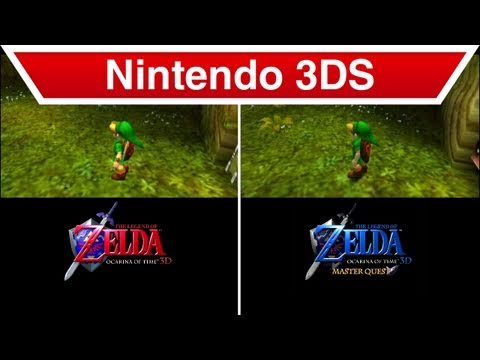 Master QuestMaster Quest is a harder version of Ocarina of Time with every dungeon rearranged, first planned as "Ura Zelda" for the Nintendo 64DD and released on GameCube as a bonus disc in 2002 and 2003; Ocarina of Time 3D (2011) includes it mirrored with double damage after the main quest. As of Oct 28, 2026, Nintendo has not said whether the Nintendo Switch 2 remake includes it; the one replay extra it has named is the Hall of Fallen Heroes, for boss and enemy rematches.
-
 Reception and legacyOcarina of Time holds a Metacritic score of 99 from 22 reviews, the only 99 on the site, and Guinness World Records names it the most critically acclaimed videogame ever; it scored 40/40 in Famitsu and 10/10 at GameSpot and IGN, sold 7.6 million copies on the Nintendo 64 and won six AIAS awards including Game of the Year. The Nintendo Switch 2 remake has no reviews yet as of Oct 14, 2026.
-
 Fire TempleThe Fire Temple is the fifth dungeon of Ocarina of Time, inside Death Mountain Crater, cleared by adult Link in the Goron Tunic; he frees the imprisoned Gorons, beats the Flare Dancer, finds the Megaton Hammer and uses it to defeat the dragon Volvagia, earning the Fire Medallion and a Heart Container as Darunia awakens as the Sage of Fire.